
Transportation
Transportation is a critical component of communities, serving as the link between residents and resources. A reliable infrastructure network enhances economic growth and the overall quality of life in the region. While most households rely on personal vehicles, mobility is a barrier for low-income families and retaining younger generations.
key metrics
56%
Decrease in total state support for transit from 2022 to 2024.
While passenger usage has increased by 27% in that same period.
1 in 4
Traffic injuries involves a driver who failed to yield
That was 451 of 1,950 injuries in 2025.
2026 report
Every day, more than half of the people who work in Springfield commute in from surrounding communities, which makes transportation a regional lifeline. The region has earned a reputation for turning plans into finished projects, from new trail miles and the Chadwick Flyer connection to Ozark to a third straight record year at Springfield-Branson National Airport. The gaps show up where people walk, bike, and ride: state transit funding has fallen sharply, commuters outside Springfield have no public transit, and pedestrians and cyclists too often share space with fast-moving traffic.


Successful Transportation Advocacy
Our area has built a strong reputation for success through regional collaboration, strategic planning, local investment, and consistent project delivery.
Local governments, the Ozarks Transportation Organization (OTO), Southwest Missouri Council of Governments (SMCOG), Ozark Greenways, economic development organizations, and state partners have partnered to advance shared transportation priorities, strengthening the region's competitiveness for state and federal funding.
This approach has helped secure significant infrastructure investments that support economic growth, improve mobility, and enhance quality of life.
Recent Trails, Sidewalk Expansion
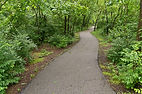
Springfield and Greene County continue to strengthen regional connectivity through strategic investments in trails, sidewalks, and multimodal transportation.
Recent milestones include $4.3 million in trail funding, completion of Grant Avenue Parkway to College Street, rehabilitation of the historic Jefferson Avenue Footbridge, and a $13.8 million Safe Streets and Roads for All grant to improve pedestrian safety along South Campbell Avenue.
Springfield-Branson National Airport (SGF)
In 2025, Springfield-Branson National Airport had its third record-breaking year in a row, serving more than 1.55 million passengers, representing an increase of 9 percent over 2024 and 70 percent increase in total passengers since 2015.
The number of airline seats available has had a steady incline, indicating growing passenger demand.

Funding Challenges
Missouri’s transit and active transportation systems face growing financial pressures.
Missouri Public Transit Association reports Missouri as one of the lowest per capita transit funders in the nation, with continued funding reductions expected.
State transit funding dropped from $1.88 per person in 2023 to $0.66 per person in 2026. These cuts strain City Utilities’ ability to maintain service.
Active Transportation and Transit Network Gaps
Despite recent transit and trail expansions, significant gaps still exist in both practical and recreational infrastructure.
85 percent of populated city blocks are within a 10-minute walk of a bus stop, but long wait times often render The Bus infeasible for riders with inflexible schedules.
As the Springfield MSA population passes 500,000, commuters outside city limits have no public transit options, and travelers arriving at the airport only have access to private transportation.
Transit ridership is growing but still lags behind pre-pandemic levels.
Safety & Comfort
Related to infrastructure gaps, safety and comfort of vulnerable road users is a perennial issue in Springfield, in part because there is not adequate separation between users of different transport modes.
While drivers typically enjoy easy, safe access to destinations, pedestrians, cyclists, and other vulnerable road users often encounter gaps in accessibility (e.g., no sidewalk, no nearby crosswalk).
Forced proximity to high-speed traffic risks the safety of pedestrians and cyclists.
A notable strategy to reduce this discomfort has been the expansion of vegetated strips separating sidewalks and multi-use paths from the curb, which creates safety and comfort for all users.


